1.Countersunk Screw Definition and Structure
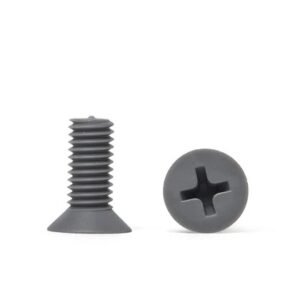
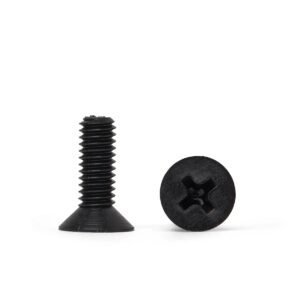
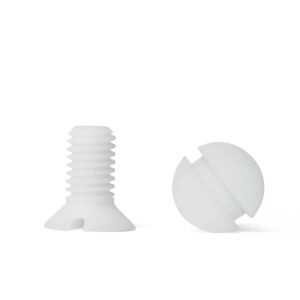
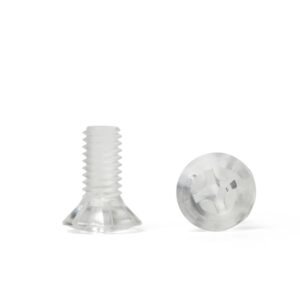
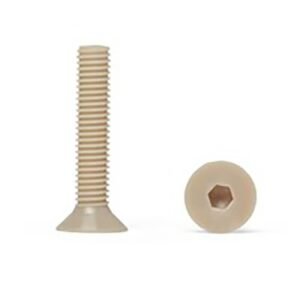
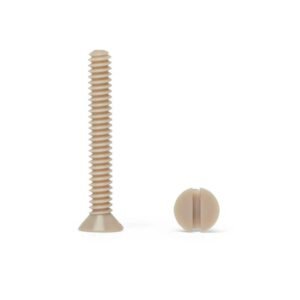
Countersunk Screw—also known as Countersunk Head Bolts, Flat Head Bolts, Countersunk Head Screws, or simply countersunk Bolts,is a specialized fastener defined by its ability to sit perfectly flush with or below the surface of the material it secures. This key feature is achieved by its distinctive head shape: a flat top and an underside that tapers into a cone, designed to fit into a matching conical hole known as a countersink.
1.Head Shape and Primary Names
- Primary Form: The head is flat on top and angled underneath (typically 82° or 90°), allowing it to be driven completely into the material. This shape defines the Countersunk Head Bolt and the Flat Head Screw.
- Terminology: While technically a Countersunk Head Bolt is designed to use a nut and a Flat Head Screw is designed to thread into a hole, the term Flat Head Bolt is commonly used synonymously with Countersunk Screw in many industries (e.g., 5/16 18 flat head bolt).
2.Drive Styles (Slot Types)
The Countersunk Screw must accommodate torque without damaging the flush surface. The drive types are recessed into the head:
- Internal Hex Drive: Countersunk Socket Head Bolt (or Countersunk Allen Bolt). Provides high torque and is common in machinery.
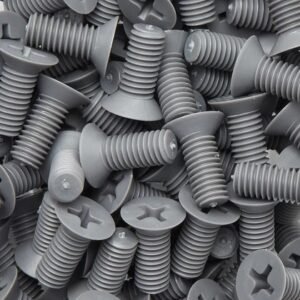
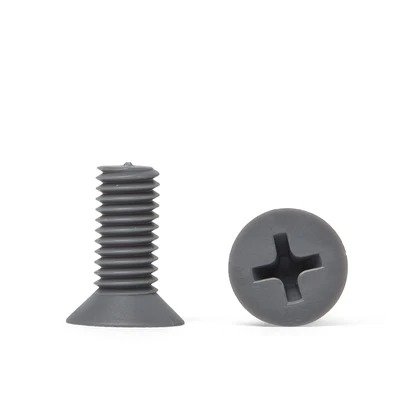
- Phillips Drive: Flat Head Phillips Screw (or Phillips Flat Head Screw). Most common for general-purpose assembly.
- Torx Drive: Flat Head Torx Screw. Offers superior torque transfer and better resistance to cam-out than Phillips.
- Slotted Drive: Flat Head Slotted Screw. Historical and simple, but transmits the lowest torque.
2. Materials and Specifications
The choice of material for a Countersunk Screw depends heavily on the required strength and environment.
1. Common Materials
| Category | Material / Standard | Key Advantage | Specification Examples |
| Metals: Steel | Alloy Steel (Grades 8, 10.9, 12.9) | Very high tensile strength; crucial for structural integrity. | M6 Countersunk Bolt, M10 Countersunk Bolt, 3/8 Countersunk Bolt |
| Metals: Stainless | Stainless Steel (A2/304, A4/316) | Excellent corrosion resistance; superior performance in wet or marine environments. | M8 Countersunk Bolt Stainless Steel, M12 Countersunk Bolt |
| Metals: Other | Brass, Aluminum, Titanium | Non-magnetic, lightweight, or specific chemical resistance. | M5 Countersunk Bolt, 1/4 Flat Head Screw |
| Polymers (Plastic) | Nylon, PVDF, Polypropylene | Electrical insulation, chemical inertness, non-conductive. | M4 Countersunk Screw (Plastic), M3 Flat Head Screw |
2. Sizing and Standards
These fasteners are strictly controlled by dimensional standards, crucial for achieving proper flush fit. Common sizes are specified by diameter and length (e.g., m6 countersunk bolt, m8 countersunk bolt, m10 countersunk bolt, m12 countersunk bolt). Engineers rely on resources like countersunk bolt dimensions pdf or countersink chart for precise countersunk bolt hole dimensions to ensure the necessary countersink callout is correct.
3.Key Characteristics
Countersunk Screws primarily revolve around the functionality and application benefits derived from their head shape:
- Flush Seating (Zero Protrusion): This is the defining feature. The conical shape of the head (typically 82° or 90°) allows it to recess completely into a matching countersunk hole, resulting in the fastener head being perfectly level with or slightly below the surface of the material.
- Smooth Surface Finish: The lack of a protruding head ensures an unobstructed, aesthetic, and safe surface, preventing snagging, catching, or tripping hazards.
- Self-Centering Action: The conical underside of the head helps guide and center the bolt precisely within the countersink during installation, providing good lateral stability to the joint.
- Recessed Torque Transfer (Low Profile Drive): They utilize recessed drive styles (such as Socket/Allen, Phillips, or Torx) embedded within the head, allowing for torque application without needing an externally bulky head.
- Aesthetic Advantage: Highly favored in applications where a clean, finished, and visually tidy appearance is required.
4. Historyand Applications
1.History
Countersunk fasteners originated in early woodworking, where screw heads needed to sit flush with the surface. As metalworking and shipbuilding advanced during the 18th and 19th centuries, metal flat head screw types evolved to reduce drag and prevent snagging on machinery.
Important milestone developments include:
- Adoption of Phillips Flat Head Screw designs in the early 20th century
- Introduction of Flat Head Slotted Screw for simple machining
- Rise of Flat Head Torx Screw for better torque control
- Development of Countersunk Socket Head Bolt / Screw for heavy structural use
- Expansion into plastics manufacturing, resulting in plastic fasteners, plastic screws, and Nylon screws.
Today, countersunk bolts are standardized globally (ISO, DIN, ANSI), enabling consistent countersunk bolt hole dimensions。
2.Applications
- Machinery: Used in machine tools, jigs, and fixtures where components must slide or move over the fastened area without obstruction.
- Finishing/Architectural: Used in flooring, cabinetry, and panels where appearance and flush surfaces are critical.
- Plastics/Composites: Self countersinking screws (often with ribs beneath the head) are used to drive themselves flush into softer materials.
5. Advantages and Disadvantages
| Advantages | Disadvantages |
| Flush Surface | Achieves a smooth, clean surface with zero protrusion. |
| Aesthetics | Provides a visually tidy and professional finish. |
| Reduced Snagging | Crucial for safety in moving machinery or high-traffic areas. |
6. Development and Future Space
The Countersunk Screw remains a cornerstone fastener, with its future growth focused on material science and intelligent installation:
- Advanced Materials: Increasing demand for plastic screws and specialized alloys (Titanium, high-strength composites) for applications requiring extreme lightness or non-magnetic properties.
- Installation Technology: Integration with smart assembly systems that use sensors to verify that the countersunk Screw head is seated perfectly flush, ensuring optimal pre-load and surface integrity.
- Standardization: Continual alignment of international standards for common dimensions (e.g., m6 countersunk bolt dimensions, m8 countersunk bolt dimensions, m10 countersunk bolt dimensions) across different materials and drive types.
- Specialized Self-Tapping: Further development of self-countersinking screws with cutting ribs for faster, single-step assembly in high-volume manufacturing.
Countersunk Screw Product

CPVC Cross counter sunk head screw
$1.00PA66 Countersunk Screws-Cross Recessed Phillips
$1.00PA66 GF30 Countersunk Screws-Cross Recessed Phillips
$1.00PA66 GF30 Slotted countersunk head screw
$1.00PA66 Slotted counter sunk head screw
$1.00PC Cross countersunk head screw
$1.00PEEK Countersunk Hexagon Socket Screws
$1.00PEEK Slotted Countersunk Bolts
$1.00