
You should pick plastic screws if you need them to not rust, stop electricity, or be light. Metal screws are better if you need them to be very strong, hold heavy things, or work in hot places. Think about what you need most: strength, not rusting, stopping electricity, weight, price, and what you will use it for.
Plastic Screws vs. Metal Screws Comparison
| Feature | Plastic Screws | Metal Screws |
| Material Strength | Lower tensile and shear strength. | High tensile and shear strength. |
| Corrosion/Chemical | Excellent resistance (immune to rust/galvanic corrosion). | Low to Moderate resistance (requires plating or stainless steel). |
| Electrical Property | Insulator (Non-conductive). | Conductor. |
| Weight | Very light. | Heavy. |
| Vibration Damping | Good (due to material elasticity). | Poor (requires locking mechanisms). |
| Temperature Limit | Generally lower (except for PEEK screws). | Generally higher. |
| Common Materials | Nylon, PTFE, PEEK, PVDF. | Steel, Stainless Steel, Brass, Aluminum. |
Why Choose Plastic Screws? The Advantages
Plastic fasteners offer a compelling set of benefits that metal screws simply cannot match in certain environments:
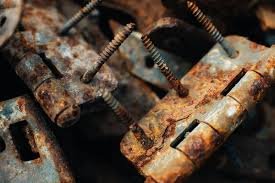
- Corrosion Resistance: This is perhaps the biggest advantage. Unlike steel or even stainless steel, plastic is immune to rust, galvanic corrosion (when dissimilar metals react), and most chemical attacks. This makes materials like PTFE screws and PVDF screws indispensable in chemical processing, marine environments, and medical applications.
- Electrical Insulation: Plastics are inherently non-conductive.2 Nylon screws and Polycarbonate screws are perfect for isolating electrical components, preventing short circuits, and securing wiring without the need for additional insulating washers.3
- Lightweight: Plastics are significantly lighter than metals.4 For industries like aerospace, automotive (e.g., automotive plastic screws), and portable electronics, reducing weight is crucial for fuel efficiency and user experience.5
- Non-Magnetic: In sensitive electronic or medical imaging equipment (like MRI machines), magnetic interference is a no-go.6 Plastic screws provide a completely non-magnetic fastening solution.7
- Cost-Effective: While high-performance engineering plastics like PEEK screws can be more expensive, common plastics like nylon or PVC are often more cost-effective for large-volume production, especially when considering the elimination of secondary finishing processes like plating.8
- Vibration Dampening: Plastics have inherent elasticity, which can help absorb vibrations, reducing loosening over time and preventing damage to sensitive components.
- Reduced Wear on Mating Parts: When fastening into plastic or softer metals, plastic fasteners can reduce wear on the mating component, which is particularly beneficial for removable panels or where a plastic self tapping screw is used directly into a plastic housing.

Common Types of Plastic Screws and Their Uses
The world of plastic screws is diverse, with each material bringing its own set of unique properties:
- Nylon Screws: The most common and versatile. Known for good strength, insulation, and chemical resistance. Used in electronics, consumer goods, and general assembly.9 Often available as Nylon machine screws or Nylon bolts and nuts.10
- PTFE Screws (Teflon): Unparalleled chemical resistance and a very low coefficient of friction. Ideal for highly corrosive environments, food processing, and high-purity applications.11
- PEEK Screws: A high-performance engineering plastic offering exceptional strength, stiffness, and continuous operating temperature (up to 12$260^\circ \text{C}$).13 Found in aerospace, medical implants, and high-temperature industrial uses.
- Polycarbonate Screws: Strong, impact-resistant, and often transparent. Used where clarity and strength are needed, like in clear covers or enclosures.
- PVC Screws: Excellent resistance to acids, alkalis, and moisture.14 Common in plumbing, chemical processing, and outdoor applications.
Beyond the Basic Screw: Plastic Fastening Solutions
The versatility of plastic extends beyond just standard screws:
- Plastic Screw Inserts / Screw Inserts Plastic: Provide durable, reusable threads in softer plastic components.
- Plastic Anchor Screws / Plastic Molly Screws: Designed for securing items to drywall or other hollow materials.
- Plastic Expansion Screw: Used to create a secure fit in pre-drilled holes.
- Plastic Head Thumb Screws / Plastic Thumb Screws: For tool-free adjustments and easy assembly.
- Plastic Screw Covers / Screws with Plastic Covers: Provide aesthetic finishes, protect from dirt, or offer insulation (plastic plugs for screw holes, plastic screw plugs).
- Plastic Spacers for Screws / Plastic Screw Spacers: Used to maintain distance between components.
- Plastic Fastener Screw: A broad term encompassing many non-threaded plastic joining methods.
Summary of Selection Recommendations
Choosing between plastic screws and metal screws isn’t about one being inherently better; it’s about making the right choice for your specific application.
- Choose plastic screws → If you require insulation, corrosion resistance, lightweight, and low cost.
- Choose metal screws → If your application requires high strength and high temperature resistance.