
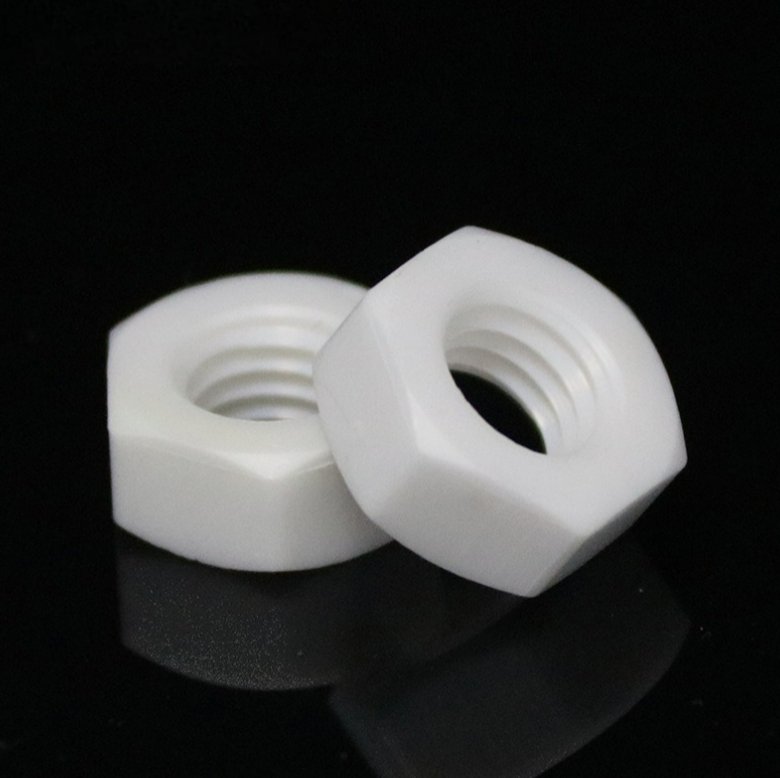
ZrO2 Hexagon nut
ZrO2 Hexagon nut are corrosion-resistant, wear-resistant, high-temperature-resistant, insulating, non-magnetic, and high-purity.
M Size: M3-M30
peek plastic material: Zirconia ceramic fasteners
product Type: Nuts
Finish: Natural/Black/Other Colors(Customizable)
Search
Product Material
- Chlorinated Polyvinyl Chloride Series(CPVC) (7)
- Perfluoro Alkoxyalkane (PFA) (8)
- Polyamide Nylon (PA66) (19)
- Polycarbonate (PC/PE/POM) (7)
- Polyether Ether Ketone (PEEK) (13)
- Polyphenylene Sulphide (PPS) (9)
- Polypropylene (PP) (10)
- PolytetraFluoroethylene(PTFE) (12)
- Polyvinyl Chloride (PVC) (7)
- Polyvinylidene Fluoride (PVDF) (9)
- RENY MXD6 (50% Glass Fibre Reinforced Nylon) (11)
Product type
Get A Quote
ZrO2 Hexagon nut Overview
ZrO2 (Zirconium Dioxide, or Zirconia Ceramic) Hexagon Nut is an ultra-high-performance ceramic fastener. It is primarily selected for its extreme hardness, exceptional mechanical strength, superior wear resistance, and high-temperature stability. ZrO2 ceramics are non-metallic and non-magnetic, making these nuts indispensable in environments where the combination of high mechanical load, high heat, and chemical inertness is required, far exceeding the capabilities of polymers and most metals.
I. Overview and Design
| Feature | Detail | Purpose |
| Material ZrO2 Ceramic) | Zirconium Dioxide (Yttria-Stabilized Zirconia, Y-TZP). A structural ceramic known for its highest toughness among advanced ceramics (due to transformation toughening). | Provides a fastener that is virtually immune to corrosion, wear, and high temperatures, while offering high strength. |
| Design (Hex Nut) | Standard six-sided external shape. | Allows for external wrench tightening, enabling secure, high-torque assembly, compatible with standard bolts. |
Product Parameters
ZrO2 Hexagon Nuts typically follow established metric standards for regular hexagon nuts, such as ISO 4032, ensuring compatibility with standard bolts and threaded rods.
| Nominal Size (Bolt d) | Thread Pitch (P) | Across Flats (s) | Nut Height (m) |
| M4 | 0.7 mm | 7.0 mm | 3.2 mm |
| M5 | 0.8 mm | 8.0 mm | 4.7 mm |
| M6 | 1.0 mm | 10.0 mm | 5.2 mm |
| M8 | 1.25 mm | 13.0 mm | 6.4 mm |
| M10 | 1.5 mm | 16.0 mm | 8.0 mm |
| M12 | 1.75 mm | 18.0 mm | 10.0 mm |
| M16 | 2.0 mm | 24.0 mm | 13.0 mm |
Key Features
ZrO2 is one of the toughest and most durable advanced ceramic materials:
Extreme Hardness & Wear Resistance: Maintains performance in highly abrasive or erosive environments.
Highest Toughness (among ceramics): Known for its ability to resist crack propagation through “transformation toughening.”
Ultra-High Temperature Stability: Maintains mechanical strength and dimensional stability at temperatures well above 1000°C (though high temperatures can cause degradation of the toughening mechanism).
Chemical Inertness: Almost completely immune to corrosion from acids, alkalis, and strong chemicals.
Non-Conductive & Non-Magnetic: Ideal for high-voltage electrical insulation and use in sensitive magnetic resonance environments.
Advantages and Disadvantages and Usage Scenarios
| Category | Advantage (Pro) | Disadvantage (Con) | Usage Scenarios |
| Performance | Extreme toughness and high mechanical strength (comparable to steel in compression). Exceptional wear resistance. | Very High Cost: One of the most expensive fasteners due to raw material and complex sintering/machining processes. | High-Wear Machinery: Fastening components in fluid transfer, grinding, or sliding mechanisms where metal is subject to erosion. |
| Material | Ultra-high temperature stability and complete chemical inertness. Non-conductive and non-magnetic. | Brittleness: While tough for a ceramic, it is still brittle compared to metal; susceptible to catastrophic failure from impact/shock loading. | Furnaces and Kilns: Securing high-temperature components in oxidative or reducing atmospheres above 1000°C. |
| Design | Hex shape allows for controlled, high-torque installation. | Installation Risk: Must be installed with precise, controlled torque to avoid stress-induced cracking. | Magnetic Resonance (MRI): Securing non-metallic equipment within strong magnetic fields. |
Packaging & Delivery
Standard packaging includes PE bag, foam cover, and one double-deck corrugated outer carton for safety during transit. Delivery time is 5-15 working days depending on the quantity.